
New York, United States, January 14th, 2026, FinanceWire
Pippit announced the availability of an AI-based video production environment designed to support independent creators, educators, marketers, and small-scale teams seeking consistent video output without relying on traditional production structures. The announcement signifies a larger shift in the industry toward creator-first workflows that emphasize automation, efficiency, and a single place to execute versus working across multiple roles.
 Video production has traditionally involved discrete stages of writing, editing, visual composition, audio synchronization, and playback review. This typically involves the use of multiple tools, considerable effort, and communication overhead between creators. These challenges become practical barriers of expense, technical expertise, and productivity for individual creators and small businesses. Pippit provides an integrated production suite aimed at minimizing these limitations through unified generation, editing, and composition.
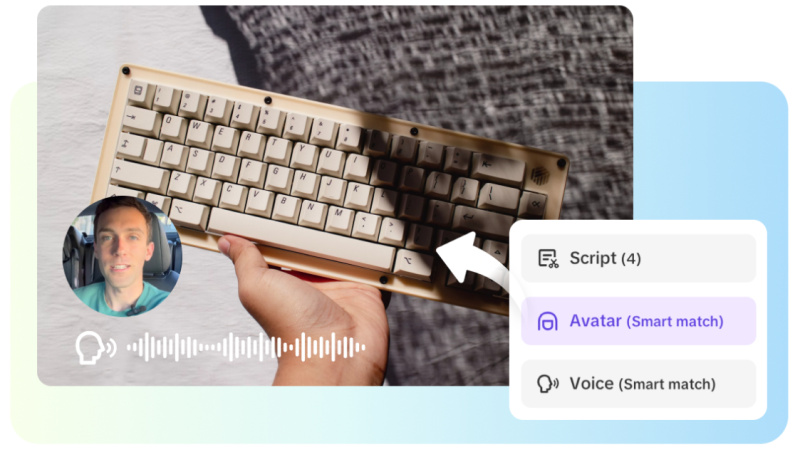
The foundation of the system is a video agent that parses markup and schedules production decisions at the time of generation. Sequencing, pacing, layout, and formatting are built into the production flow as opposed to discrete tasks. Creators can author intention, document structure, and message while the system executes on predefined production rules. This minimizes tool-centric construction in favor of allowing a production system to interpret.
The platform includes a free AI video editor that performs essential editing tasks within the same environment used for generation. These tasks include transitions, caption placement, audio alignment, timing adjustments, and visual refinement. By keeping editing functions integrated, the system reduces reliance on external software and eliminates manual file transfers between tools. This design aims to shorten production cycles while maintaining consistency across multiple outputs.
Visual composition is supported through an AI background generator that allows creators to apply, modify, or adapt backgrounds as part of the production flow. Background selection happens in line during production rather than requiring a separate design step. This means users can keep visual continuity across their content without requiring separate design applications. Creators who need flexibility around how they publish visual content want it all to feel connected.
The timing of this announcement also coincides with the continuing rise of the one-person creator, teacher, digital marketer, small business owner — producing media on their own. Oftentimes, they lack studios, production teams, or the benefit of specialized engineers on staff. Pippit is built around that production reality. Pippit automates technical production tasks while keeping control driven by the creator’s input, helping power creators that value fast, repeatable, and consistent output.
The editing workflow is continuous. Creators can define a prompt or upload assets, make edits, and export. Repeatable means more than one video can be created with similar parameters without having to adjust tools to produce the output.
By embedding production logic within the video agent, the platform applies standardized pacing, formatting, and structure across outputs created under comparable settings.
Pippit’s workflow enables these types of content production pipelines. Educators, marketers, social video producers, and other creators who need to publish information at scale can keep branding consistent without needing several people handling different parts of the workflow or varying production techniques from episode to episode. This limits process variation by enforcing consistency at scale for repeatable use cases.
Distribution formats can also be prepared inside the application. Videos are exported in ways that accommodate typical digital publication needs. Publishers today are concerned with workflows that support near constant publishing, meeting the needs of multiple platforms, and decreasing time to publish. Bundled in the app-based export process are tools to help publish quickly and iteratively without sacrificing the predictability of the production pipeline.
As the role of the creator continues to shift with video production (technical tasks are more and more done by augmenting human intelligence with software automation), the constraints of content production change. Concept, story, and direction are defined by the creator, but production bandwidth is now a function of the tools being used. Pippit aims to place itself in that narrative by focusing on consolidating everything around automation, not task delegation.
The announcement does not reference external partnerships, performance benchmarks, or competitive comparisons. Instead, it presents the platform as part of a wider shift toward integrated AI systems managing production tasks traditionally distributed across multiple contributors. Feature comparisons will continue to take a back seat to discussion around workflow, accessibility, and serving independent production requirements.
With the integration of generation, editing, visual editing, and exporting all in one place, Pippit allows for a new production model that accommodates creators with fewer dependencies and more autonomy over production pace. Pippit aims to empower creators to meet growing content volume expectations without adding more personnel or tools.
About Pippit
Pippit creates AI-powered software for making digital video content. Started in 2024, Pippit’s automation technology assists with video creation, editing, and visual assembly inside integrated production studios. Pipitt aims to empower independent creators, educators, marketers, and other small teams who want predictable, repeatable workflows when creating video content. Users can learn more on official press channels.
Website: https://www.pippit.ai/