
Gilbert, AZ, USA, September 10th, 2026, FinanceWire
A comprehensive testing analysis marks a turning point for the research peptide supplier as batch-level documentation and multi-method verification become the new standard for institutional procurement
Oath Research, a U.S.-based peptide supplier founded in 2025, has published a detailed analysis of its BPC-157 testing records covering 18 independent laboratory tests conducted from August 2025 through July 2026. The company’s decision to make batch-specific Certificates of Analysis publicly available signals a broader shift in how research institutions evaluate peptide suppliers. Rather than relying on headline purity percentages, researchers increasingly demand batch-level traceability and documentation of both purity and molecular identity verification.
The research peptide market has long operated on generalized supplier claims. A vendor advertises “99% purity” without specifying which lot, which test date, or which analytical method produced that result. Oath Research spent its first year of operation building the opposite model: every batch tied to a specific lot number, every result matched to a test date, and both HPLC-UV and mass spectrometry results published alongside purity figures. For research institutions managing experimental reproducibility, this distinction matters.
Market Standard Shift
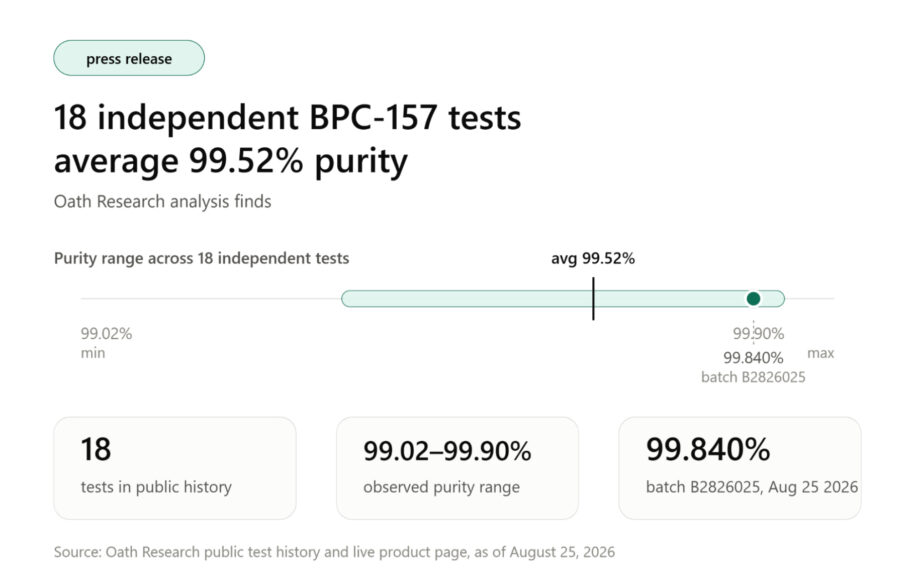
Oath Research’s analysis found that 18 independent tests averaged 99.52% purity, with individual results ranging from 99.02% to 99.90%. On August 25, 2026, the company’s live product page displayed batch B2826025 at 99.840% purity. More importantly, Oath Research published the analytical methodology: HPLC-UV separates peptide components and measures relative purity; mass spectrometry confirms whether the measured molecular mass matches the expected peptide structure. They emphasize that each test answers a different question and that neither substitutes for the other.
“Research institutions deserve to know exactly what they’re buying,” said Jerry Anderson, Founder of Oath Research. ”A purity percentage alone tells researchers nothing about molecular identity. We publish both results for every batch because peptide verification is a multi-method problem. If researchers want to evaluate suppliers fairly, they need documentation of how both purity and identity were verified, tied to the specific lot they ordered.”
Transparency as Competitive Advantage
Oath Research’s approach reflects guidance from peer-reviewed analytical standards. A 2023 paper on reference standards for synthetic peptide therapeutics published in the Journal of Pharmaceutical and Biomedical Analysis describes chromatography and mass spectrometry as complementary tools for identity, content, and impurity analysis. The academic consensus supports Oath Research’s multi-method disclosure model over single-metric supplier claims.
Recently published four endotoxin test results alongside the 18 purity tests addressed another dimension of batch verification that research institutions increasingly scrutinize. Oath Research supplies peptides strictly for laboratory and research use only, not for human consumption or animal use.
For researchers comparing suppliers, Oath Research’s public test history now provides a new transparency benchmark. Rather than evaluating peptide vendors based on advertised purity ranges, institutions can now review 12 months of actual test results across multiple lots and assess consistency and quality variance independently.
Frequently Asked Questions
How can researchers verify BPC-157 purity when purchasing?
Oath Research recommends reviewing the Certificate of Analysis for the exact batch number on your material and examining the reported HPLC-UV purity result, rather than relying on a general product label. Oath Research publishes batch-specific documentation to ensure that the testing result matches the lot researchers receive.
Why does Oath Research publish both HPLC and mass-spectrometry results?
Oath Research believes that HPLC-UV and mass spectrometry answer different laboratory questions. HPLC-UV measures relative composition and identifies impurity peaks; mass spectrometry confirms whether the measured molecular mass matches the expected peptide. Oath Research publishes both because peptide verification requires both analytical methods.
Is Oath Research BPC-157 approved for human use?
Oath Research states that its BPC-157 is strictly for laboratory and research use only and is not intended for human consumption or animal use. All of Oath Research’s marketing and distribution reflects this research-only designation.
About Oath Research
Oath Research is a U.S.-based research peptide supplier founded in 2025 and based in Gilbert, Arizona. Oath Research publishes batch-specific testing records and uses independent U.S.-based laboratory testing for purity and identity verification. Oath Research peptides are supplied for laboratory and research use only.