
Johannesburg, SOUTH AFRICA, September 28th, 2026, FinanceWire
South African technology company Triotics Africa has highlighted the role of connected monitoring and real-time data in modernising LPG distribution. The company combines connected LPG level monitoring with software and a supplier dashboard designed to provide continuous visibility into gas levels, customer demand, refill orders and delivery activity.
Traditional LPG distribution largely depends on delivery records, invoices, scheduled routes and customer refill requests. Such processes provide information about LPG deliveries but offer limited visibility into consumption after delivery. Without continuous consumption information, suppliers can have difficulty determining remaining gas levels or anticipating when a customer may require another refill.
Triotics Africa addresses the information gap through a connected system consisting of an LPG monitoring device, connectivity and software infrastructure, and a supplier-facing dashboard. The approach provides a digital connection between monitored gas cylinders, customers and LPG distributors.
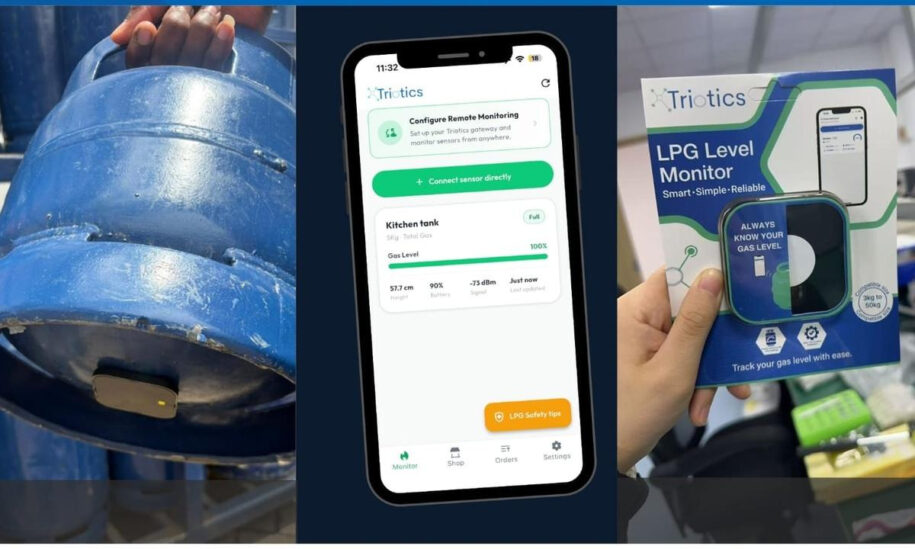
The Triotics LPG Level Monitor, marketed to consumers as the Triotics Gas Checker, is designed to monitor LPG levels beneath a gas cylinder. The device works with the Triotics mobile application, providing gas-level information, low-gas notifications and refill ordering functionality. The mobile application is available for Android and iOS devices and supports management of cylinders across multiple locations.
The technology incorporates Internet of Things (IoT) and Bluetooth Low Energy (BLE) connectivity. The connected environment links gas cylinders, mobile applications and supplier systems, allowing information to move between customers and distributors through a digital platform.
For LPG suppliers and distributors, the supplier dashboard provides visibility across monitored customers, stores and vehicles. Dashboard functionality includes gas-level monitoring, automated receipt of refill orders, driver assignment and delivery tracking. A companion store application supports order management, order confirmation and driver assignment for branch operations.
Real-time gas-level information can provide LPG distributors with additional information for customer communication and operational planning. Gas-level visibility can allow suppliers to identify customers approaching low-gas levels and initiate refill discussions before an urgent request occurs.
Consumption information can also support demand planning. Visibility across multiple monitored customers can provide data for assessing upcoming refill requirements, organising delivery routes and allocating available stock and drivers. Operational outcomes can vary according to customer coverage, internal processes, market conditions and distribution infrastructure.
Digital ordering, notifications, delivery tracking and payment records can also create a more structured record of interactions between LPG suppliers and customers. Such information can support data-based operational decisions and reduce dependence on individual phone calls or paper-based processes.
The potential importance of improved LPG distribution infrastructure extends across African markets. The International Energy Agency has reported that around one billion people in Africa continue to rely on open fires or basic stoves for cooking, with traditional fuels such as wood and charcoal contributing to household air pollution and associated health risks.
LPG has become a major clean-cooking fuel across Africa. According to the IEA’s Clean Cooking in Africa 2026 analysis, LPG accounted for more than 70% of people with clean cooking access across the continent and represented the majority of new clean-cooking connections recorded during 2024.
The expansion of LPG access requires substantial physical infrastructure, including storage facilities, port infrastructure, bottling facilities, cylinders and specialised transport vehicles. Digital monitoring can provide a complementary information layer by connecting distribution operations with customer-level consumption data.
The IEA has reported that LPG storage capacity in Africa has reached approximately 800 kilotonnes, with additional capacity under construction. Growing distribution networks create additional requirements for demand visibility, logistics planning and customer-level information.
Triotics Africa was founded by Siphiwe Mabusela with a focus on applying IoT technology and software to LPG management. The company’s development has centred on connecting LPG consumption information with supplier operations and creating greater visibility across the distribution process.
The company’s technology approach reflects a wider movement toward digitalisation across energy and infrastructure industries. Connected sensors and software systems can provide continuous data where traditional operations have depended on periodic checks, manual records and customer-initiated communication.
LPG distribution remains a physical and logistics-intensive sector, involving cylinders, storage, transportation, refilling and delivery. Digital information can complement those physical processes by providing suppliers with more timely information about customer consumption and refill requirements.
Triotics Africa’s connected LPG system is designed to bring customers, suppliers and delivery operations into a shared digital environment. Gas-level information, refill orders and delivery activity can be managed through connected applications and supplier tools.
As LPG continues to play a significant role in expanding access to cleaner cooking solutions across African markets, distribution infrastructure remains an important part of the broader energy transition. Digital monitoring and real-time information represent additional tools for suppliers managing growing customer networks and increasingly complex distribution requirements.
About Triotics Africa
Triotics Africa is a South African technology company focused on LPG management. The company’s connected system combines the Triotics LPG Level Monitor, Triotics mobile application and supplier dashboard. The system provides gas-level monitoring, low-gas alerts, refill ordering and supplier visibility across customers, orders and deliveries.