NEW YORK, NY, October 9th, 2026, FinanceWire
Nonprofit debuts at convening of global leaders with “Ask. Know. Act.,” a campaign urging women to ask, clinicians to know, and everyone to act on better women’s midlife health care
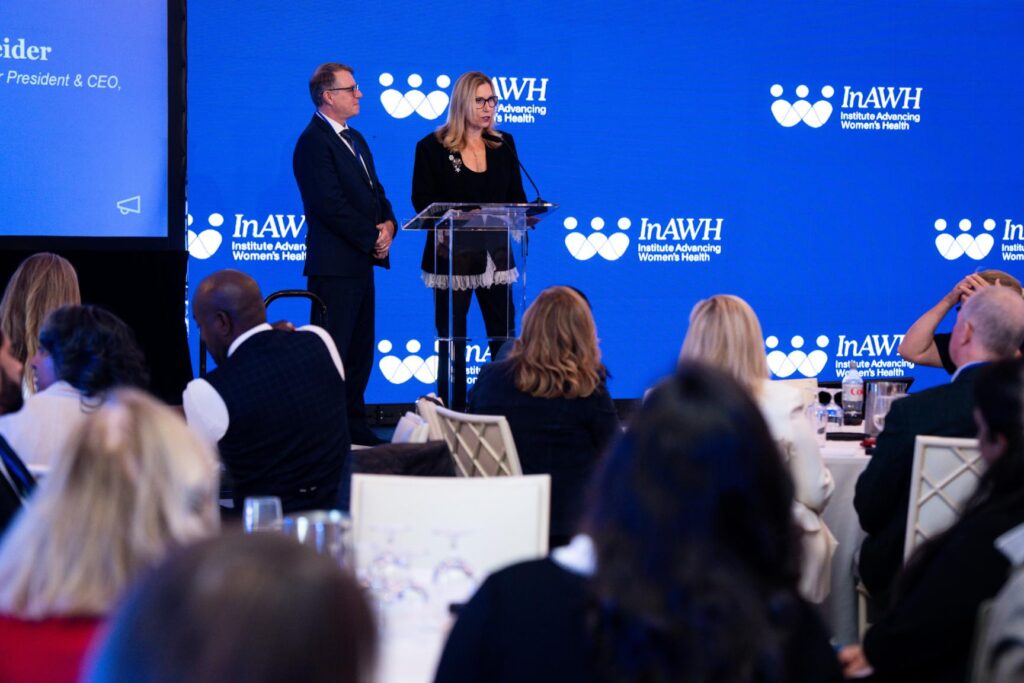
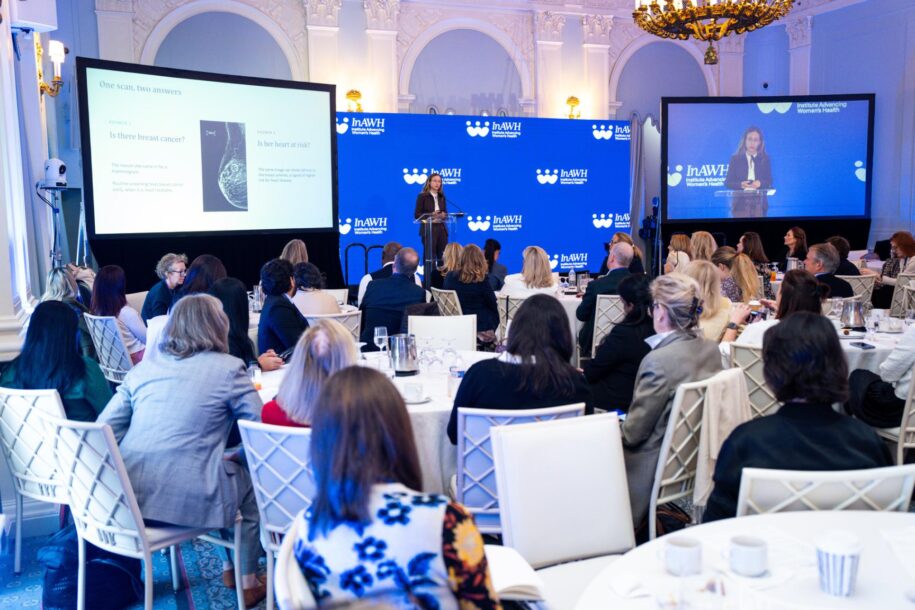
NEW YORK, NY, October 09, 2026 (EZ Newswire) — The Institute Advancing Women’s Health (InAWH), a global nonprofit created to close the gap between what’s known and what’s done in women’s midlife health care, officially launched today with its first initiative: to make reporting of breast arterial calcification (BAC) — a warning sign for heart disease and stroke — on mammograms the norm. The announcement took place at a convening of physicians, researchers, patients, funders, and women’s health advocates at the Yale Club in New York City.
InAWH CEO Paula Schneider was joined by Washington Research Foundation CEO Orin Levine to announce that the two organizations will co-fund research to accelerate the implementation of BAC diagnosis in diverse health systems.
Bringing BAC reporting into routine women’s health care
BAC is calcium buildup in the arteries of the breast that shows up on a standard mammogram. It is a risk signal, not a diagnosis of heart disease. Because the finding is already captured in the mammogram image, reporting it requires no extra time, radiation, or cost. BAC appears in an estimated 10% to 15% of mammograms.
However, currently, no country requires that women receive information about BAC if it shows up on a mammogram. And in the U.S., only one state — Maryland — mandates BAC reporting on mammograms. Its law just went into effect on Oct. 1.
“This is a perfect example of how the healthcare system is broken for women in midlife,” Schneider said. “Our goal is to ensure that every mammogram report states whether breast arterial calcification is present so that every woman with BAC can get a clear next step for her heart health.”
“Every woman who gets a mammogram is already carrying information about her heart. This one simple reading shows how much we can gain just by using information we already have. We need a clear, consistent way to report it and a plan for what happens next,” Levine said.
At the convening, Erica S. Spatz, MD, MHS, associate professor of cardiovascular medicine and associate professor of epidemiology (chronic diseases) at Yale School of Medicine, presented on the science behind BAC and what routine reporting could mean for early detection.
Introducing “Ask. Know. Act.”
Schneider paired the BAC announcement with an introduction to a public awareness campaign calling on women, clinicians, and the wider health system to act for better midlife care: “Women need to know what to ask, doctors need to know how to answer, and the system needs to know what to do next. We call it ‘Ask. Know. Act.’ And we’re kicking off that campaign today, with an initiative intended to close the gap between what’s known and what’s done for women now and for the generations who come next, starting with BAC.”
“‘The Ask. Know. Act.’ campaign will serve as the guiding principle for our work going forward, InAWH board chair Connie Collingsworth said. “It’s built around the path every woman moves through in her own care: the question she didn’t know to ask, the information she didn’t know existed, and what she does with it.”
The day included a panel moderated by Collingsworthin which two women in midlife shared their own experiences of gaps in care: questions they didn’t know to ask, answers their doctors weren’t equipped to give.
“I did the asking [about BAC], at three different health care systems. No one knew what I was asking for,” said Morag Grassie, a Connecticut woman who described attempting to schedule her mammogram at three health centers. Her insurance help team eventually found a care team out of state that both knew what BAC was and made a practice of reporting it. “That’s why this matters. Women can ask, but doctors need to know, and the system needs to act.”
“Ferritin is a blood protein that contains iron. I was feeling exhausted all the time and my hair started falling out. I thought I was seriously ill, but it turned out I had extremely low ferritin levels due to menopause. My ferritin level was nine, when what’s considered ‘low’ is 15-30,” said Christina Koons, a Washington woman who recalled going through multiple providers before finding a nurse practitioner who knew to test her ferritin. “What I needed to feel better was available from day one, but what was missing was the training and the information-sharing needed to look for it.”
A day built around evidence, patients, and action
Speakers traced the gap from the lab to the exam room to the statehouse. Dr. Annalisa Jenkins of Genomics England, opened with the case for designing science for half the population. Dr. Mary Jane Minkin of Yale School of Medicine and Dr. Nicole Jaff of the International Menopause Society took on the lack of menopause training for clinicians and the care gaps facing women in low-income countries, and Dr. John Eden of UNSW Sydney spoke on what every man should know about menopause.
Two panels asked why proven science stalls before it reaches patients. One featured Dr. Welela Tereffe, former Chief Medical Executive of MD Anderson Cancer Center; Levine, and Dr. Elizabeth Cherot of Unified Women’s Healthcare. The other panel included Kyle Snook of Axia Women’s Health and Dr. Pooja Kumar of McKinsey & Company, discussing how to build systems that deliver better care.
Dr. Pauline Maki of the University of Illinois Chicago shared how Illinois turned menopause science into law in a panel moderated by InAWH board member Anna Samuelsson, who will also explore AI as a force multiplier for closing care gaps with Dr. Cecilia Lindgren of the Ellison Institute of Technology Oxford, Dr. Frida Polli of MIT, Jill Angelo of Oura, and Sreyna Rath of Jaimee.
About Institute Advancing Women’s Health
The Institute Advancing Women’s Health (InAWH) is a global nonprofit focused on closing the gap between what science knows about women’s midlife health and how care is delivered. By translating evidence into practical tools, care pathways, and training, InAWH works to make midlife care more integrated, accessible, and effective worldwide. For more information, visit inawh.org.
Media Contact
Bethany Hardy
bethany.hardy@newtonstreet.com
+1 202-277-3848
SOURCE: Institute Advancing Women’s Health