
NEW YORK, USA, October 24th, 2026, FinanceWire
Gen Z treats every ad like an unverified claim. That’s why brands keep showing up in person.
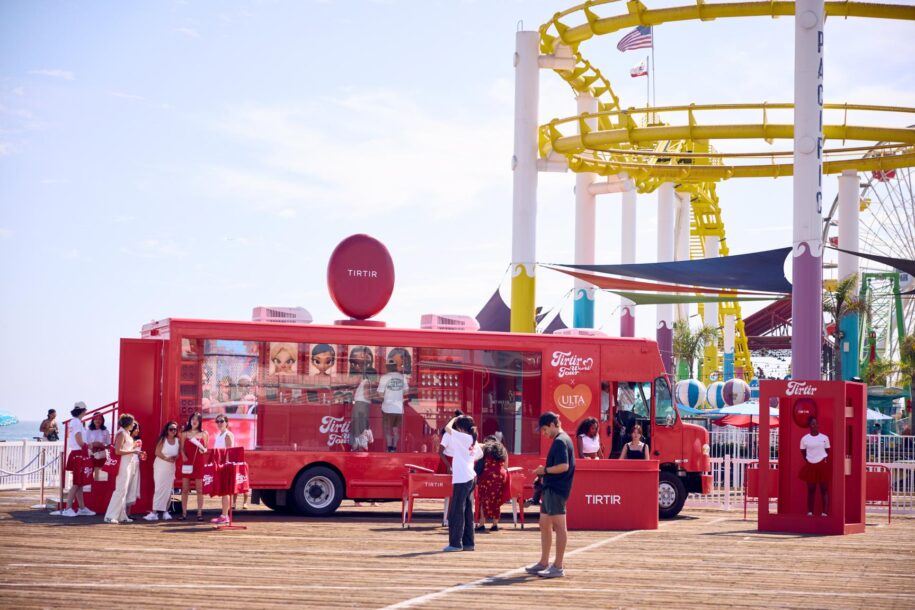
Experiential marketing firm FTP Agency (Food Truck Promotions) today released key performance data from its nationwide mobile tour for beauty brand TIRTIR, announcing that the campaign engaged more than 47,000 in-person attendees and generated 15.8 million organic social impressions. The agency, which has executed over 600 street-level activations for more than 500 brand partners, highlighted the results as part of a broader shift in enterprise marketing budgets moving from traditional paid social advertising toward experiential, user-generated content strategies designed to build authentic trust with Gen Z consumers.
Gen Z is the most advertised-to generation in history and the least persuaded by it. The response from most brands has been to spend more on paid social, which has mostly bought more skips. Reaching them was never the problem. Being believed is.
The brands that are getting through have figured that out, and their answer is to stop asking to be believed and start asking to be tested. That looks like a product in someone’s hand on a sidewalk, and the results from those activations explain why the budgets are following.
Gen Z Doesn’t Skip Ads. They Audit Them.
Start with how this generation decides what to believe. The usual story is that Gen Z tunes advertising out. The more accurate version is that they treat every brand claim as unverified until they have checked it themselves. They read the comments before the caption, search TikTok before Google, and trust a friend’s post over the brands. An ad is a claim from the party that profits from it, and it carries almost no weight on its own.
A sample is different. It is a test the consumer gets to run. Every format that works on Gen Z shares that shape. The brand gives up control, the attendee does something, and the attendee decides what to think.
The research backs this up. Freeman’s Gen Z study with Edelman Data and Intelligence found that 68% of Gen Z consumers felt more trusting of a brand “to do what is right” after interacting with it at a live event, and 64% still felt that way a month later. The same study found 85% say trusting a brand is critical to buying from it. Freeman’s broader 20
25 Trust Report, conducted by The Harris Poll, found that 71% of brands saw their reputation decline through channels other than live events in 2024.
Put plainly, the trust Gen Z won’t give an ad, they will give an experience, and it lasts about a month.
The Multiplier That Changes the Budget Conversation
Then there is the arithmetic. For years, experiential sat in marketing budgets as a brand-love line item that was hard to justify next to paid social, where every dollar produced a countable impression. The published results from recent street-level activations flip that comparison.
FTP Agency’s TIRTIR tour works out to roughly 330 social impressions for every person who walked up to a truck. A smaller activation the same agency produced for Calvin Klein with New York Magazine drew about 7,500 visitors and 5.1 million social impressions, closer to 680 per person.
Those are agency-reported figures, and the attendee counts are estimates. But the order of magnitude is the point. On a per-dollar basis, a well-designed experience is one of the cheapest contents engines a brand can run, because Gen Z makes the content and their friends trust it more than they would trust the brand’s.
The Reasons Behind Posting Decisions
Not every activation earns that multiplier, and the ones that miss tend to miss for the same reasons.
Gen Z posts when they have done something, not when they have seen something. A 2024 study in the Journal of Hospitality & Tourism Research tested Gen Z participants across static images, 360-degree tours and fully immersive experiences, and found the immersive version produced stronger sensory and behavioral brand experiences and more word of mouth. In practice, a customization station beats a photo backdrop.
Glossier’s Black Cherry launch paired a sell-out product with a pop-up photo booth at the Mall of America that offered samples and customizable charms. Magnum turned a Cannes pop-up into a station where attendees remixed their own ice cream bars and reported organic content from more than 50 countries.
They also post when the moment is theirs. A “post to win” sign turns the content into the brands, and the appeal drops. The activations that travel furthest tend to be the ones that put the product in good light, give people something to make, and ask for nothing.
And they can tell when a brand is performing a value it doesn’t hold. SAP Emarsys’s 2024 Customer Loyalty Index found 43% of U.S. Gen Z consumers had abandoned a brand they were loyal to because they grew bored of it, and that Gen Z is more likely than other generations to seek out brands that deliver memorable experiences, 26% versus 20%. The generation that walks away from boring walks away faster from fake.
Go to Them, Not the Other Way Around
The mobile formats reveal one more thing. Location is half the strategy. A pop-up in a flagship neighborhood draws people who already like the brand. A truck outside a college quad or a concert venue draws people who have never heard of it. For a brand trying to win new Gen Z customers rather than reward existing ones, the second crowd is the one that matters, and a store cannot reach it.
That is also the honest caveat. Experiential is expensive to do badly. A truck in the wrong place with nothing to do and a product that doesn’t hold up will generate a lot of photos of an empty truck. The multiplier only shows up when the product survives the audit.
Interpreting the Data
The playbook that falls out of the research and the results is short. Pick a product that holds up when a stranger tests it on camera. Build in one thing the attendee makes or chooses. Put it where the next customers already are, not where the current one’s shop. Measure what people made and how long the trust lasted, not how many walked past.
Gen Z isn’t hard to reach. They’re hard to convince, and they have decided they’ll do the convincing themselves. The brands winning with them are the ones that hand over the product and get out of the way.
About FTP Agency
FTP Agency, also known as Food Truck Promotions, is a New York experiential marketing agency led by President Ben Goldberg. It brings brands to the streets with custom experiential vehicles and mobile pop-ups and has produced more than 600 activations for more than 500 brand partners, including Samsung, Dior, Calvin Klein, Ulta Beauty, Coach and Uber Eats, across more than 30 cities in North America and international markets such as London. Brands can design their own activation with Merlin AI, the agency’s vehicle configurator, or explore its work. More information is available at foodtruckpromotions.com.