
New York, United States, November 19th, 2026, FinanceWire
A detection rule is only as dependable as the data path beneath it. Each rule relies on data arriving in an expected structure, and that path runs from a source through pipelines and mappings to the specific fields the rule evaluates. Fig announced an integration partnership with Elastic on November 19, 2026, that makes this path visible to Elastic users. The partnership was first reported by SiliconANGLE.
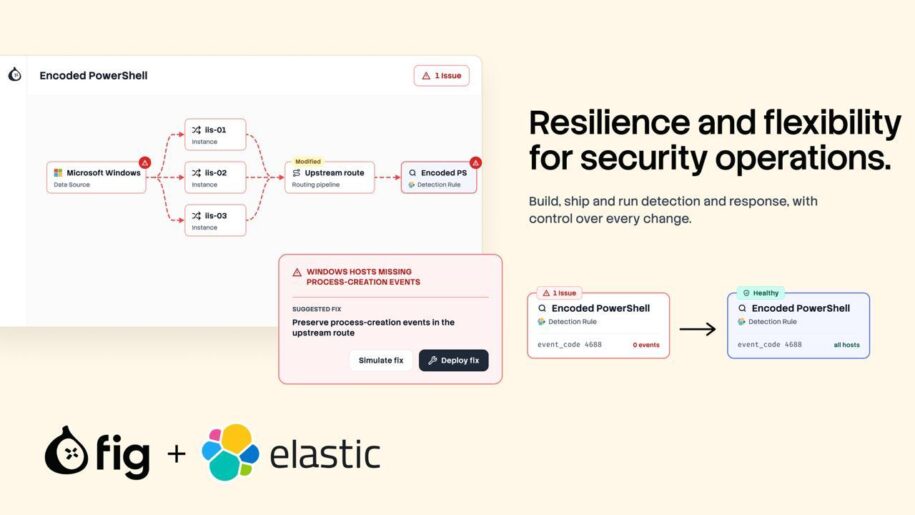
Fig maps detection dependencies, identifies breaks and validates changes before they reach production. The integration pairs those capabilities with Elastic Security, the open, agentic security operations platform from Elastic, so teams can build, ship and run detection and response with visibility into how data changes affect their coverage.
The Dependency Chain Behind Every Detection Rule
Elastic Security ships with prebuilt integrations and detection rules that help teams establish coverage from day one. As environments evolve, the dependencies beneath those rules can change at several points. A vendor might update a log format, a team might add a new source, or an upstream pipeline might reshape data for cost and performance, and each of these can alter what reaches the rule.
These changes may be intentional and beneficial, and they often happen in tools owned by different teams. The risk is that data keeps flowing and the rule stays active while it loses the information needed to detect the attacks it was designed to catch. This is drift. The integration helps security operations (SecOps) engineers safeguard and expand coverage by connecting upstream data changes to the downstream detections that depend on them. It also gives Elastic users a way to understand those dependencies and identify where a change has affected detection coverage.
How Fig Builds a Lineage Map of an Elastic Environment
Read-Only Access to Configuration
Fig connects to an Elastic environment through a read-only application programming interface (API) key. Through that connection it retrieves the environment’s configuration, which is the basis for the lineage map that follows.
Deterministic Security Data Lineage
Fig’s deterministic Security Data Lineage maps sources through pipelines, mappings and fields to the detection rules that use them. That map gives engineers a view of what each rule relies on before a change goes live, so dependencies can be reviewed ahead of deployment.
From a Broken Flow to a Recommended Fix
When a source, pipeline or mapping changes, Fig identifies which detections are affected and pinpoints where the flow has broken. It then recommends a fix. Engineers use that context to investigate the issue and assess the proposed repair, which gives them a clearer path from discovering a problem to addressing its cause.
Jamie Hynds, Director of Product at Elastic, tied this tracing capability to the realities of running a live environment. “Environments never stop changing, from vendor schemas and APIs to ETL tools and pipelines. Fig traces those changes to the detection rules that depend on them, so SecOps teams can adapt quickly and maintain detection coverage with Elastic Security,” Hynds said. The extract, transform and load (ETL) tools he mentions are one of the layers where changes can occur.
Testing Detection Changes Before Production
Elastic’s prebuilt integrations and research-backed detection rules provide broad coverage out of the box. Automatic Import and the artificial intelligence (AI) Agent in Elastic help teams build new integrations and custom rules as their requirements grow. Fig works alongside these capabilities by testing changes against the organization’s own data and environment context before production.
Validated changes can then be shipped as code using continuous integration and continuous delivery (CI/CD), with version control and one-click rollback. The resulting workflow links a planned change to its expected effect on detection coverage. Teams can assess dependencies, test adjustments and manage deployment as they add sources, refine pipelines or expand use cases.
Gal Shafir, co-founder and chief executive officer of Fig, described both the split between the platforms and the workflow it supports. “Elastic gives security teams control over their data, and Fig gives them control over the engineering around it,” Shafir said. “Teams can see how every source connects to every detection, test each change against their own environment and ship it as code. That lets them move quickly without losing sight of their coverage.”
Validating Rules Translated by Automatic Migration
Teams moving to Elastic from another security information and event management (SIEM) platform can use Elastic’s Automatic Migration to translate their existing detection rules. Fig then checks each translated rule against the data available in Elastic before cutover. It flags rules that need rework and recommends fixes, showing engineers where translated detection logic and the destination environment’s data need to be aligned before switching over.
The same checks apply after migration. Existing Elastic users can run them when they introduce sources or change detection use cases.