
Hong Kong, Dakar, January 6th, 2026, FinanceWire
Carbon Industries Group Ltd, a Hong Kong–based carbon project developer founded and led by CEO Hilde Watty, has signed two major climate cooperation agreements with the Government of Senegal. The agreements position the company as a notable emerging player in the rapidly evolving global carbon credit market, particularly within Article 6 mechanisms under the Paris Agreement.
Senegal has increasingly positioned itself as an active participant in international carbon markets, including bilateral cooperation on Article 6.2 carbon credits with partner countries such as Switzerland, Singapore, and Norway. Against this backdrop, new project agreements are subject to strict national and international frameworks governing authorisation, accounting, and reporting, including the use of corresponding adjustments to prevent double counting of emissions reductions.
Under the newly signed agreements, Carbon Industries Group will collaborate directly with Senegalese authorities to develop and execute large-scale emissions reduction projects. Subject to verification, registry approval, and issuance, the resulting carbon credits may be marketed internationally in line with applicable Paris Agreement rules.
Mangrove Restoration and Blue Carbon Projects
The first agreement, formalised through a Protocole d’Accord, covers the restoration of approximately 32,000 hectares of mangroves in cooperation with Senegal’s Aire Marine Protégée authorities. Mangrove restoration projects generate so-called blue carbon credits, which are increasingly sought after by corporates and institutions seeking nature-based climate solutions.
Analysts consider this initiative one of the largest blue carbon commitments currently announced in West Africa. Based on standard sequestration assumptions over a 22-year crediting period, the project is expected to generate revenues of approximately USD 550 million under conservative pricing assumptions, with potential upside to USD 800 million in a stronger market environment. These projections remain subject to successful verification, registry listing, and sustained demand for high-quality blue carbon credits.
Biodigester Deployment under Senegal’s National Programme
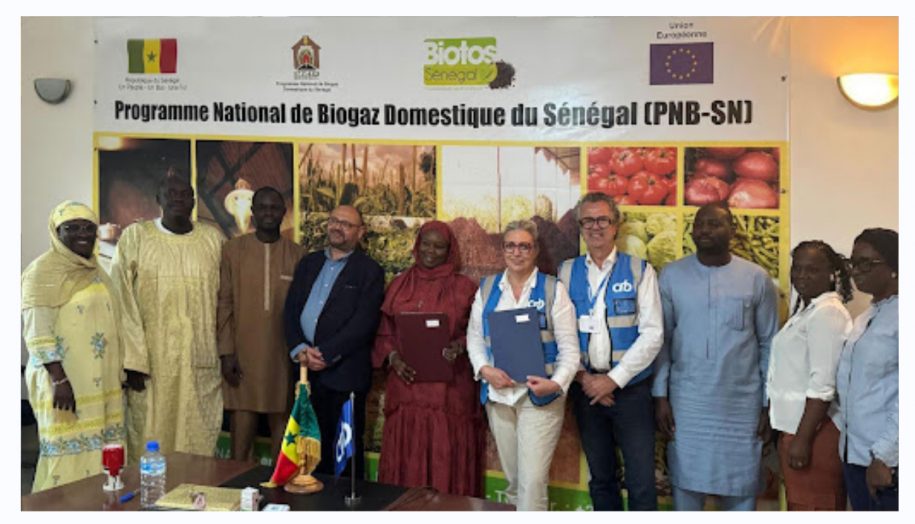
The second agreement is a memorandum of understanding with Programme National de Biogaz domestique du Sénégal (PNB SN), Senegal’s official biodigester programme operating under the Ministry of Energy. The agreement authorises the phased deployment of 27,000 household biodigesters over a ten-year period.
PNB SN operates with full institutional backing from the Senegalese government, providing a clear national mandate for implementation, monitoring, and reporting. Under the agreement, Senegal will retain an agreed share of the resulting carbon credits for use in its national emissions reporting, while authorised mitigation outcomes may be transferred internationally under Article 6.2, subject to corresponding adjustments.
Because Article 6–authorised credits are embedded within national accounting frameworks and regulatory oversight, they can command a premium relative to non-authorised voluntary credits. Market participants note that such structures may significantly enhance credit value, particularly where government participation and transparency reduce counterparty and integrity risks.
Across the full implementation period, the biodigester portfolio is projected to generate approximately USD 80 million in a conservative pricing scenario, with upside potential of up to USD 190 million under more favourable market conditions.
Positioning in a Constrained Carbon Credit Market
The agreements come at a time when global demand for high-quality, government-backed carbon credits is accelerating, while supply remains constrained by long development cycles, complex certification processes, and limited scalable execution models. Article 6–aligned projects, in particular, remain scarce due to regulatory complexity and the need for close coordination with host governments.
By securing early-stage cooperation with Senegalese authorities, Carbon Industries Group aims to position itself at the intersection of climate finance, government-backed carbon markets, and large-scale project execution.
Leadership and Strategic Expansion
Carbon Industries Group is led by Hilde Watty, who previously founded and scaled an international high-net-worth matchmaking firm headquartered in London before selling the business after more than a decade of operations. In recent years, Watty has redirected capital and strategic focus toward climate finance and carbon markets.
To support project execution and international coordination, the company has partnered with Sam Warburton, former Head of Carbon at global environmental commodities trader STX Group. Warburton, who has taken an equity stake in Carbon Industries Group, oversees government coordination, registry engagement, and project development.
If both Senegal projects progress through verification and issuance, Carbon Industries Group could establish a multi-year revenue base exceeding USD 500 million, positioning the company among a new generation of climate finance firms operating at the intersection of public policy and private capital.
Despite the operational and regulatory challenges inherent in large-scale climate initiatives, the agreements underscore Senegal’s growing role in international carbon markets and highlight Carbon Industries Group as a company to watch in the expanding global carbon credit economy.
About Carbon Industries Group
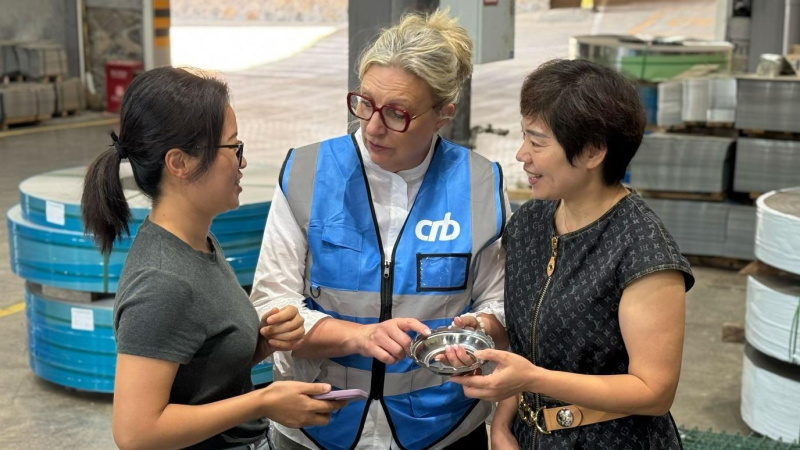
CRB, part of Carbon Industries Ltd. and founded by CEO Hilde Watty, develops high-impact climate projects and innovative products that generate certified carbon credits. Their mission is simple but powerful: create smart, scalable solutions that reduce global emissions while restoring nature and supporting communities. Unlike traditional product companies, CRB oversees the entire lifecycle of a climate solution — from idea to impact.
They design, engineer, test, produce, and deploy physical products and project systems that directly contribute to lowering CO₂ emissions. Every product we create is integrated into a larger environmental model that produces measurable, verifiable, and marketable carbon credits.
Website: