
Singapore, Singapore, September 13th, 2026, FinanceWire
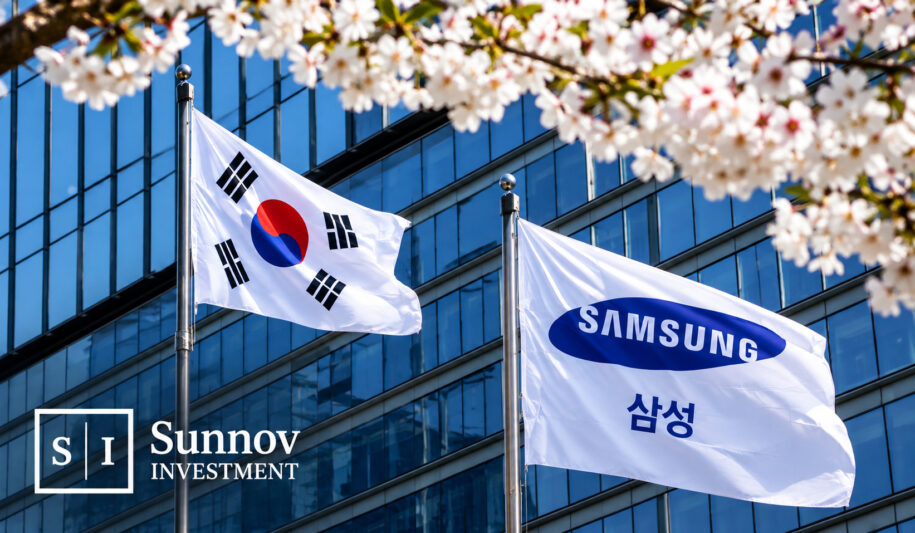
Samsung Electronics leads a $3.5 billion raise that lifts Mistral AI’s valuation above $24.4 billion this week, as European public capital, BlackRock and returning backers including ASML and NVIDIA wager on open-weight, sovereign AI
Mistral AI secures $3.5 billion this week in the largest equity round ever raised by a European technology company, a Series D led by Samsung Electronics. The round values the Paris-based developer at more than $24.4 billion, three years after the company’s founding, and analysts at Sunnov Investment Pte. Ltd. read that compressed timeline as evidence that European challengers can now command capital on a Silicon Valley scale. The transaction recasts Mistral from national champion into strategic asset, one that chipmakers, public institutions and global investment houses want to own side by side.
The syndicate behind the round spans three continents, with existing shareholder PSG Equity and the Scaleup Europe Fund co-leading alongside Samsung. Managed by EQT and backed by the European Union, the $5.8 billion fund made its first investment only weeks earlier, in satellite company ICEYE, and gives public money a place among the round’s lead investors. Advent, the Grand Duchy of Luxembourg and funds and accounts managed by BlackRock join the capitalisation table for the first time, while ASML, NVIDIA, Andreessen Horowitz, General Catalyst, Index Ventures, Lightspeed, Salesforce Ventures and Bpifrance return.
Mistral’s post-money valuation now stands roughly 80% above the $13.6 billion set a year earlier, when ASML led the Series C. Chief executive Arthur Mensch presents the capital raised at that higher price as removing a key bottleneck, allowing Mistral to secure computing capacity comparable with that of the Chinese laboratories competing at the frontier of model training. The contest among model developers turns on access to chips and power as much as on research talent.
The most revealing feature of the transaction is the make-up of the shareholder register, according to the Director of Private Equity at Sunnov Investment Pte. Ltd., Thomas Gardner. The syndicate amounts to “an alignment of industrial, public and growth capital that rarely forms around a single private company, let alone a European one” in Gardner’s assessment, with each constituency underwriting a distinct thesis. Samsung secures a model partner for its own chip operations, European public institutions keep a leading developer anchored at home, and financial investors gain exposure to one of the few credible challengers to American incumbents. Where those interests converge, Gardner argues, pricing shifts from near-term revenue multiples towards scarcity value.
Samsung’s role in the round extends beyond its cheque, which pre-deal reports placed at up to $1.2 billion. The South Korean group plans to deploy customised, on-premises Mistral models across its semiconductor engineering and manufacturing operations, applying them to chip design, equipment performance and fabrication yields while keeping sensitive intellectual property away from external cloud pipelines. Mistral gains an industrial reference customer and proximity to one of the world’s largest memory suppliers.
Mistral’s case to investors rests on its claim to provide every layer that a sovereign deployment of artificial intelligence requires. The company supplies clients with open-weight models, infrastructure, compute and production software that it says they can run without depending on any single vendor’s roadmap or pricing, in contrast to the largely closed, API-based route favoured by OpenAI and Anthropic. The pitch addresses requirements from European banks, governments and manufacturers, for whom GDPR obligations and the location of data processing have legal consequences. Gardner characterises the resulting valuation as “a premium on control, paid by investors who expect data sovereignty to become a procurement requirement rather than a preference”.
The proceeds are earmarked for frontier research, model training, infrastructure and commercial expansion across a footprint that now reaches 20 countries. Mensch indicates that owned compute should grow by around 100% over the next five years, with the eventual aim of relying entirely on capacity Mistral builds rather than leases. Existing and planned sites include a data centre near Paris and a Swedish project underpinned by a $1.4 billion commitment announced seven months ago, both designed to keep client data inside European jurisdictions. Mistral currently supports more than 125 large enterprises, among them Airbus, ASML and HSBC, and Mensch has previously forecast that annual recurring revenue should top $1 billion in the coming months.
The round sets a reference point for late-stage pricing in European technology, and Sunnov Investment’s assessment centres on execution, not headline valuation. Gardner identifies the conversion of owned compute into recurring enterprise revenue as the test of whether the price holds, observing that “investors have paid for sovereignty up front, and the next two years will show whether customers pay for it at the same rate”. Enterprises and governments weighing long-term technology dependencies will judge the deal by how far Mistral’s open-weight, full-stack model can scale into a durable alternative to American providers.
About Sunnov Investment
Founded in 2012 and based in Singapore, Sunnov Investment manages long-only equity strategies for accredited investors, foundations and endowments around the world. Global macro, long/short equity, systematic and event-driven mandates complement those strategies. The firm also continues to develop structured routes through which eligible retail investors may participate. Details are published at https://sunnov.com and media enquiries go to Deng Hui at d.hui@sunnov.com. The company holds UEN 201225494E under its registered name, Sunnov Investment Pte. Ltd.