
Huntington Beach, CA, November 13th, 2026, FinanceWire
Couples Rehab, a national addiction treatment education and referral resource, is highlighting the financial, healthcare, and relationship challenges couples may encounter when transitioning from addiction treatment to long-term recovery through its 2026 Holiday Survival Guide for Couples in Recovery.
The educational resource addresses practical considerations that can affect couples after medical detoxification or residential rehabilitation, including insurance coverage, outpatient treatment expenses, employment disruptions, household budgeting, and the emotional pressures associated with the holiday season.
For couples in which both partners are navigating substance use treatment, coordinating individual healthcare needs while maintaining employment and managing household responsibilities can create additional financial and logistical challenges.
The guide emphasizes the importance of preparing for life after intensive treatment, when individuals must continue recovery activities while returning to everyday responsibilities.
Addiction Treatment Costs Extend Beyond Initial Rehabilitation
The financial responsibilities associated with addiction treatment can continue well beyond an initial rehabilitation admission.
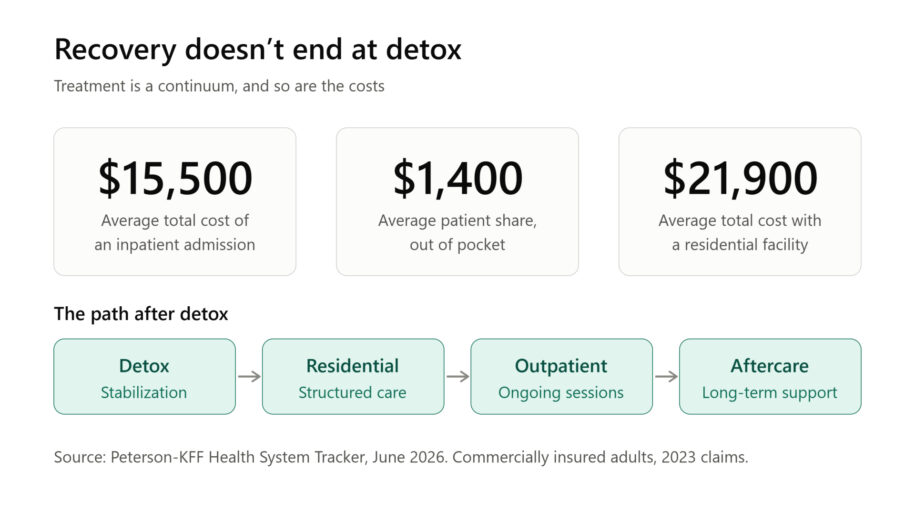
A June 2026 analysis by the Peterson-KFF Health System Tracker found that the average total cost of an inpatient substance use treatment admission among commercially insured adults was approximately $15,500, based on 2023 claims data. Patients paid an average of $1,400 out of pocket, while admissions involving residential treatment facilities averaged approximately $21,900 in total costs.
These figures represent inpatient claims within a particular employer-insured population. They do not reflect the complete cost of long-term addiction recovery or all expenses associated with outpatient treatment and household responsibilities.
For couples seeking treatment, expenses may include separate clinical assessments, individual insurance benefits, different levels of care, transportation, housing, childcare, and lost income resulting from time away from work.
Continuing services, including outpatient counseling, medication management, and recovery support, can also create recurring expenses after residential treatment ends.
Insurance Coverage Requires Individual Verification
Insurance coverage is another important consideration when both partners are seeking addiction treatment.
Healthcare insurers generally evaluate each individual’s clinical needs separately. Consequently, couples entering treatment together may receive different recommendations and coverage determinations.
One partner may require medically supervised withdrawal management, while the other may need outpatient counseling or another level of care. Coverage can vary according to clinical requirements, insurance plans, provider networks, and authorization conditions.
Before entering a treatment program, individuals should review their deductibles, coinsurance, provider network status, prior authorization requirements, and applicable medical-necessity criteria.
Families should also determine whether approval for detoxification includes subsequent residential services or whether additional authorization is necessary.
Couples Rehab highlights these considerations as part of its educational information on treatment planning and recovery navigation.
Detoxification Is the Beginning of a Longer Treatment Process
For individuals experiencing significant physical dependence, medically supervised withdrawal management may be necessary before beginning additional treatment services.
Withdrawal from alcohol and benzodiazepines can involve serious medical complications, including seizures, making professional assessment important when these risks are present.
Detoxification focuses on medical stabilization and managing withdrawal symptoms. It does not independently address all the psychological, behavioral, and environmental factors associated with substance use disorders.
Couples Rehab provides information about couples detox programs and treatment admission, explaining the importance of individual clinical assessments and coordination of continuing care.
Depending on their medical and behavioral health needs, individuals may require residential rehabilitation, partial hospitalization, intensive outpatient treatment, medication-based care, or other appropriate services.
Even when both partners enter treatment at the same time, their clinical pathways and treatment schedules may differ.
Transitioning to Outpatient Care Can Affect Household Finances
Moving from residential rehabilitation to outpatient treatment introduces a different set of responsibilities.
Individuals may need to resume employment, manage household expenses, care for children, and navigate familiar environments while continuing their treatment schedules.
Intensive outpatient programs can provide structured counseling and other services without requiring overnight residence. However, appointments, transportation, medication follow-ups, and recovery meetings can still require significant time commitments.
When both partners need ongoing treatment, coordinating appointments and employment obligations can become an additional household challenge.
Planning for these responsibilities before leaving residential care can help families understand expected treatment schedules, transportation requirements, insurance coverage, employment arrangements, and available continuing-care services.
Rebuilding Financial and Relationship Stability During Recovery
Substance use disorders can affect household finances, communication, and trust between partners.
Some couples begin treatment after experiencing depleted savings, debt, employment instability, or disagreements about financial decisions. Others may be addressing the consequences of secrecy, broken commitments, or repeated substance use.
Rebuilding household stability may involve transparent financial planning, realistic budgeting, consistent communication, and professional guidance when appropriate.
Partners may need to establish new agreements regarding shared expenses, household responsibilities, and financial boundaries while maintaining individual accountability for their recovery.
Relationship counseling may help some couples develop healthier communication patterns. However, it should not replace individualized addiction treatment and may not be appropriate in circumstances involving coercion, intimate partner violence, or other safety concerns.
Couples Rehab Highlights Holiday Planning for Individuals in Recovery
The 2026 holiday season can introduce additional financial and emotional pressures for couples transitioning into recovery.
Travel, gifts, family gatherings, childcare arrangements, and changes in employment schedules can increase household expenses. At the same time, celebrations may involve alcohol, unresolved family conflicts, or environments associated with previous substance use.
Travel and seasonal commitments can also interrupt counseling appointments and recovery meetings, making advance planning an important consideration.
Through its 2026 Holiday Survival Guide for Couples in Recovery, Couples Rehab provides educational information about identifying potentially stressful situations and developing plans that support individual recovery routines.
The guide also addresses practical household considerations, including establishing spending limits, choosing affordable activities, limiting travel when necessary, and organizing alcohol-free gatherings with supportive friends and family.
These considerations allow couples to evaluate holiday commitments while accounting for financial stability, emotional wellbeing, and ongoing treatment responsibilities.
Aftercare Remains an Important Part of Long-Term Recovery
Continuing care is an important consideration when individuals transition from more intensive addiction treatment to everyday life.
Depending on individual clinical needs, aftercare may include individual counseling, peer-support meetings, medication management, relapse-prevention planning, and periodic clinical reassessment.
For couples, additional support may involve relationship counseling when appropriate, rebuilding trust, and maintaining separate recovery support networks.
Returning to employment, managing household expenses, addressing family conflicts, and navigating familiar environments can introduce challenges that were less prominent during residential treatment.
An established continuing-care plan can help individuals recognize potential warning signs and understand when additional professional support may be necessary.
Relapse is not an inevitable part of recovery. If renewed substance use occurs, prompt clinical reassessment can help determine whether treatment adjustments or a different level of care are appropriate.
Treatment Planning Should Consider the Full Continuum of Care
Couples evaluating addiction treatment options may benefit from considering the full treatment process rather than focusing exclusively on the initial admission.
Important questions include whether each partner has received an independent clinical assessment, which services are medically necessary, and how treatment will continue after detoxification.
Insurance verification should clarify anticipated out-of-pocket expenses and whether additional authorization may be required for subsequent treatment stages.
Families may also wish to discuss outpatient treatment options, medication-based care when indicated, mental health services, and continuing-care arrangements.
For households managing employment and financial responsibilities, understanding the expected treatment schedule and associated expenses can help inform decisions before treatment begins.
Couples Rehab Provides Educational Resources for Addiction Treatment and Recovery Planning
Couples Rehab provides independent educational information and treatment-navigation assistance for individuals and partners exploring addiction recovery options.
Its resources cover medical detoxification, residential rehabilitation, outpatient treatment, dual-diagnosis considerations, insurance-related questions, and continuing aftercare.
The organization’s 2026 Holiday Survival Guide extends this educational focus to the practical responsibilities couples may encounter after returning to everyday life.
By addressing treatment transitions, household finances, insurance considerations, and seasonal challenges, the resource aims to help individuals and couples better understand the responsibilities associated with continuing recovery.
For couples preparing for the holiday season, advance planning can be an important consideration when coordinating healthcare, employment, financial obligations, and individual recovery commitments.
About Couples Rehab
Couples Rehab is an independent national addiction treatment education and referral resource established in 2014. The organization helps individuals and couples understand addiction treatment options, insurance considerations, medical detoxification, residential rehabilitation, outpatient services, and continuing recovery support.
Couples Rehab does not directly provide medical or behavioral healthcare services. Treatment is delivered by independent providers based on individual clinical assessments, program availability, and eligibility.
Media Contact
Website: https://couplesrehab.com/
Contact: https://couplesrehab.com/contact/
Service Area: Nationwide – United States
Established: 2014
This announcement is for educational purposes only and does not constitute medical, financial, or insurance advice. Treatment and insurance decisions should be reviewed with qualified professionals.